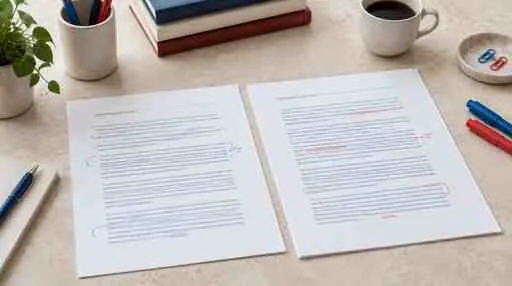
French localization should name the target region and the reader relationship. Vocabulary, formality and conventions can differ across French-speaking markets.
Choose France, Canadian French or another audience
Provide product terminology, approved legal wording and the target channel. Review negation, dates, payment conditions and metadata alongside the visible page; check buttons and tables after text is set in the design.
For recurring interface copy, keep a short locale sheet with the approved form of address, date and number conventions, and product terms. Link each decision to the screen or source sentence it governs. When a campaign spans more than one French-speaking market, have the reviewer flag the variants that need separate wording instead of silently blending them into one version.
Review terminology against the selected locale
A literal phrase may sound natural yet change the scope of a warning or promise; compare meaning, not just fluency.
Does one French version fit every market?
No. Identify the intended region and audience before setting terminology. The language-pair index includes the neighboring French and other regional guides.
Set rules for dates, spacing and formal address
The brief should name the target French-speaking market, intended reader and degree of formality. Include approved terminology, product names and required legal wording. For public claims, provide the evidence and qualifiers that must accompany them; a concise French headline must not omit a condition that changes what is promised.
Check the full layout after text replacement
Review the whole user path in context, including labels, error messages and the linked destination page. Check negation, dates, currency and text expansion in the final design. Ask a local reviewer to flag market-specific vocabulary rather than assuming a single French version is appropriate everywhere.
Example: preserve a contractual condition in French
Test a translated campaign from ad to landing page. The promise, qualifier and call to action should remain coherent in the target market, including on a narrow screen where a disclosure may wrap differently.
Choose the French market before adapting tone
A single language label does not settle regional usage or regulatory wording.
- Specify France, Canada or another target market.
- Check market-specific product terms, numbers and required notices.
- Review the call to action in the final page context.
Questions about French translation
Does one register suit every French-language audience?
No. Specify the relationship and market in the brief.
Can a disclaimer be shortened?
Only when the approved legal meaning and visibility are preserved.
Apply the locale choice to a form
A French landing page may reuse a line from an advertisement but add a legal qualifier below the fold. Compare the promise and its condition at the same screen width. If the qualifier becomes difficult to see after localization, fix its placement instead of trimming required context from the wording. The page owner should approve both the language and visual hierarchy.
| Claim | Qualifier | Mobile review |
|---|---|---|
| Keep scope and qualification beside the statement. | Check that the condition remains attached. | Inspect line breaks and disclosure visibility. |
Include the target audience with the source
Name the target market, audience, formality, product terms and legal reviewer. Provide the surrounding campaign or interface so a short phrase is not reviewed without its condition. Check the layout after translation and preserve disclosures at a readable size on mobile.
Does French terminology vary by market?
Yes. Name the target region and audience in the brief.