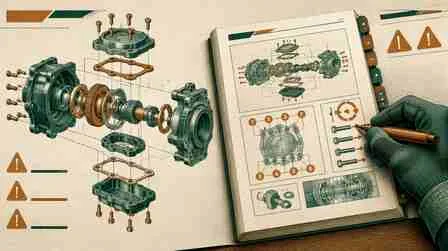
Technical instructions connect component names, measurements, warnings and ordered actions. One inconsistent term can make it unclear whether a reader should inspect, install or replace a part.
Collect the product revision and supported environment
Provide the product revision, diagrams, target user expertise and a term list. Match units and tolerances to the source; keep warnings attached to their steps and verify every cross-reference after layout.
Test terminology against the manual and interface
Never convert a measurement without recording the source unit, target unit and conversion rule.
What makes a technical translation reviewable?
Versioned source files, stable terminology and traceable checks for steps, units and warnings. The document review guide covers the layout and revision checks that accompany technical terminology.
Set controls for warnings, units and version labels
Technical text should be tied to a model, revision and intended operator. A safety warning written for a trained technician may be too ambiguous for a consumer manual. Send diagrams, component IDs, units, warning hierarchy and the source change log with the text. Maintain one approved term for each part, then record manufacturer-specific wording where a generic synonym could cause confusion.
Match the instruction to the current product build
Quality review should follow the actual task sequence. Verify that the right component is named before an action, every measurement and tolerance matches its source, and warnings appear before the risky step. Test links to diagrams and referenced sections. If an instruction appears unsafe or internally inconsistent, flag it for the responsible engineer instead of silently editing the procedure.
Example: preserve a safety condition
For a maintenance sequence, verify the component identifier before checking each action and warning. A reviewer should be able to trace a translated instruction to its source step and product revision without relying on memory.
Check a technical instruction against its source
A reviewer should be able to trace every translated action to the right equipment revision.
- Confirm model, manual revision and component identifier.
- Match each measurement, warning and action to the same source step.
- Route suspected design or safety errors to the responsible engineer.
Questions about technical terminology
May a translator correct an apparent technical error?
Flag it for the engineer or product owner; do not silently alter the procedure.
When should units be converted?
Only under an approved rule with source and target values retained.
Apply the checks to a troubleshooting step
For a maintenance procedure, compare the component label in the diagram with the label in each instruction. Confirm that the specified tool, torque or temperature belongs to the same model revision as the source. If a warning precedes a step in one language but follows it in another, resolve the placement before release; users may act before they see a late warning.
| Procedure element | Revision check | Reviewer action |
|---|---|---|
| Keep action, order, warning and unit together. | Compare steps against the current source release. | Test labels and instructions in the delivered interface. |
Files and revision details for technical review
Provide the equipment model, manual revision, diagrams, parts list, units and operator profile. Keep warning severity and numbering aligned to the source. A technical reviewer should check the target steps against the correct product revision, while the language reviewer checks terminology, sequence and cross-references.
Who approves a suspected safety issue?
The responsible engineer or product safety owner, not the translator alone.