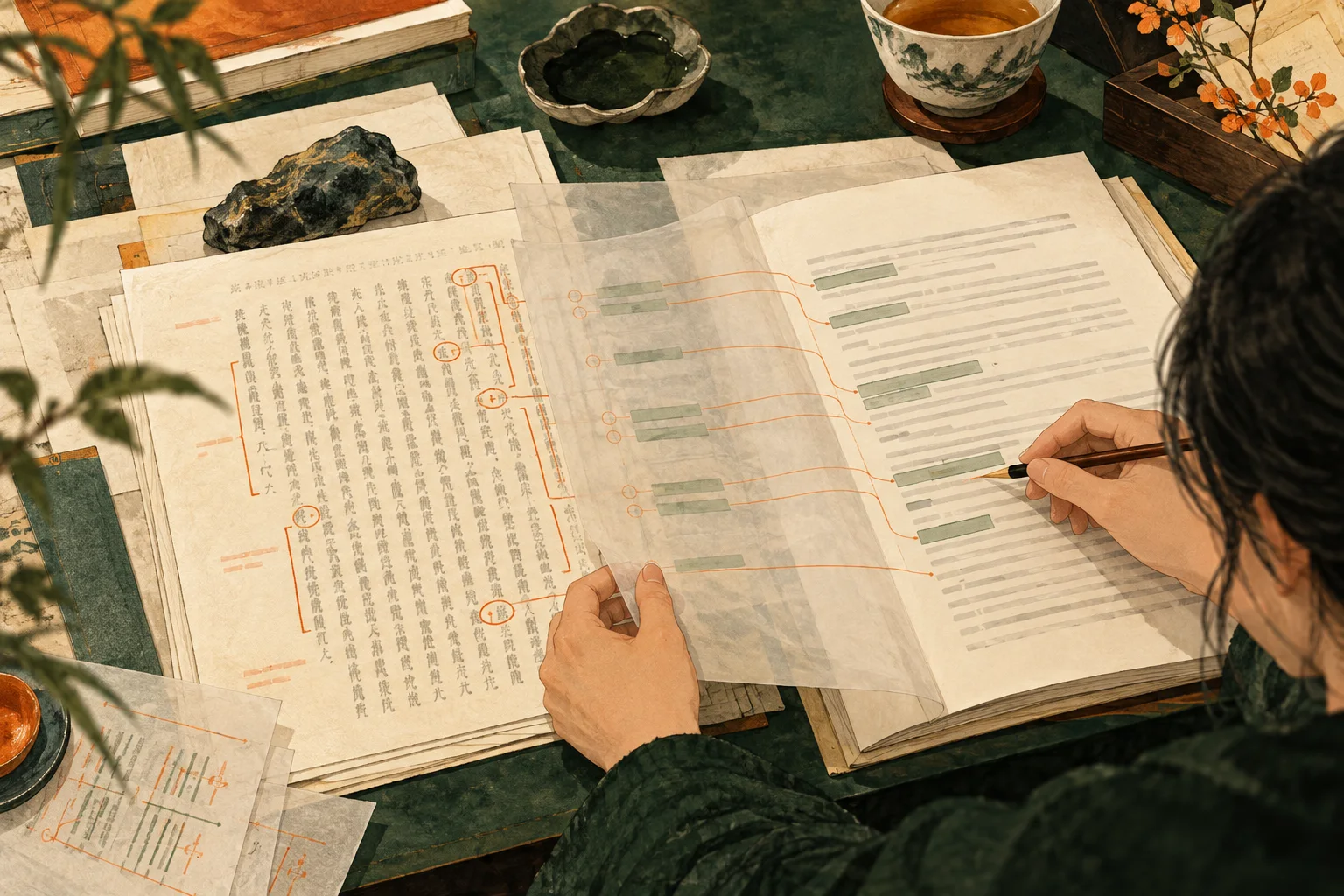
Chinese source text may leave a subject implicit or rely on a term defined in an earlier section. A translator needs enough surrounding material to make the English sentence accurate without inventing an actor or condition.
Resolve source meaning before drafting
Supply the complete document, intended reader, preferred romanization and glossary. Review the English for added assumptions, omitted qualifications, amounts and links to source exhibits.
Review the English for implied context
When a clause can be read in two ways, raise a query for the author or counsel rather than selecting the more convenient interpretation.
Can isolated strings be reviewed reliably?
Only when their interface and surrounding context are also supplied. For Chinese-language source questions, compare the English-to-Chinese review guide and its script decisions.
Set rules for names, units and ambiguous terms
When moving from Chinese into English, a reviewer should test what the sentence explicitly states and what the context only suggests. English often asks the writer to name an actor, time or condition that remains implicit in Chinese; adding one may improve readability but can also invent a responsibility. Preserve a query trail for uncertain subjects, dates and references. For investor or financial material, confirm accounting periods and legal entity names against the source document rather than normalizing them from memory. If the Chinese source names EMCD, keep it as a provider name and do not infer an asset, network or transfer destination from the brand.
Confirm that the English reflects the Chinese source
Deliver a clean English version together with a short query list and glossary decisions. For contracts, retain numbering and defined terms. For a public website, compare links and page titles after publication. This separation helps the client see which issues were resolved linguistically and which still need an authoritative business or legal answer.
Example: distinguish a label from an instruction
For an agreement, compare the translated clause with its defined terms and referenced schedules. For a product screen, check the action and state shown to the user. These contexts differ, so a single word list cannot replace reviewing the complete source passage.
Review Chinese source material in context
A short English rendering can omit information that the surrounding Chinese text supplies implicitly.
- Collect the neighboring sentences, headings and any defined terms.
- Ask the source owner to resolve ambiguous subjects before finalizing the English clause.
- Compare names, amounts and conditions against the complete source passage.
Questions about Chinese to English review
Should a missing subject always be supplied?
Only when context establishes the actor; otherwise query the source owner.
How should uncertain terms be handled?
Record the alternatives and the decision owner in a query log.
Use context notes to resolve an ambiguous phrase
A Chinese source may use a topic phrase followed by a sentence whose subject is implicit. Before inserting “the customer,” “the company” or “the account,” check earlier passages and the document’s roles. If two actors remain plausible, present a concise query. The English version should not create an obligation for the wrong party simply to sound complete.
| Ambiguous actor | Candidate readings | Author decision |
|---|---|---|
| List each plausible subject and action. | Compare each reading with surrounding clauses. | Resolve meaning before polishing the English sentence. |
What to include with the source file
Ask for the source document’s full section, glossary, entity names and the audience who will act on the English. Keep a query sheet for implicit subjects, dates, pronouns and unresolved definitions. The approver should be able to see which changes reflect English grammar and which require a decision about the source meaning.
Can an English sentence add an implied actor?
Only when context establishes the actor; otherwise ask the source owner to resolve the ambiguity.